PARCELVIEW3D · INDUSTRY INSIGHT
How buyer-controlled 3D exploration is quietly rewriting the rules of how land and homes get sold.
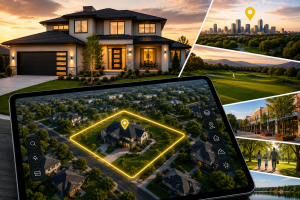
Somewhere between the yard sign and the closing table, a quiet shift has taken hold in how property changes hands. For decades, a buyer’s understanding of a piece of land or a home was assembled secondhand — from a grid of flat photos, a paragraph of description, and, if they were lucky, a drone clip shot on a clear day. The buyer was a passenger. The seller, or their agent, decided what got shown and what stayed out of frame. That model is now giving way to something more powerful and, frankly, more honest: the self-guided property tour — an interactive, buyer-controlled experience that lets prospects explore a property in full 3D, on their own terms, before they ever pick up the phone.
This isn’t a novelty. It’s a structural change in buyer behavior, and the sellers who adapt to it are already pulling ahead. Platforms like ParcelView3D have made the self-guided tour accessible to solo land investors and small builders — not just enterprise brokerages with enterprise budgets. Understanding why this matters starts with understanding what buyers actually do when you hand them the controls.
From Passive Viewer to Active Explorer
The core insight behind the self-guided tour is deceptively simple: people trust what they discover themselves more than what they’re told. When a buyer can rotate a parcel, tilt the camera to read a slope, follow a road frontage line, or fly over a ridge to see how a building envelope sits on the land, they stop wondering and start understanding. The property stops being a listing and becomes a place.
That change in posture — from passive viewer to active explorer — is where the commercial value lives. Industry engagement data has been consistent on this point for years: interactive listings hold attention far longer than static ones. Where a buyer might spend a few seconds scrolling a photo gallery, a 3D experience routinely keeps them engaged for minutes. And in real estate, dwell time is a proxy for intent. The longer someone spends turning a property over in their hands, the more emotionally committed they become to it. We explored this dynamic in more depth in Give Buyers More Than a Screenshot, but the short version is this: engagement is not vanity — it is the front edge of conversion.
Why the Self-Guided Model Filters for Serious Buyers
There’s a second, less obvious benefit that seasoned sellers notice quickly. Self-guided tours don’t just attract more interest — they attract better interest. When a prospect can answer their own questions by exploring the property — Is it on a hill? How far is the road? What does the surrounding terrain look like? — the tire-kickers filter themselves out before they ever reach your inbox.
The buyers who do reach out have already toured the parcel in detail. They’ve formed a mental picture, weighed the drawbacks, and decided to move forward anyway. That’s a fundamentally different conversation than fielding a wave of “do you have more photos?” emails. For a one-person land operation, that shift is the difference between drowning in low-quality leads and spending your time on people who are ready to buy. If you’re running lean, the land marketing stack for a one-person operation leans heavily on this kind of self-service qualification — it’s how a solo seller competes with teams ten times their size.
Land Was Left Behind — Until Now
It’s worth pausing on why land, specifically, was so late to this party. The first wave of 3D touring technology was built for the inside of buildings. Walkthrough-style virtual tour products — the best-known being platforms like Matterport — solved a genuine problem for residential agents: letting a buyer wander a finished home’s rooms remotely. Those tools are excellent at what they were designed for.
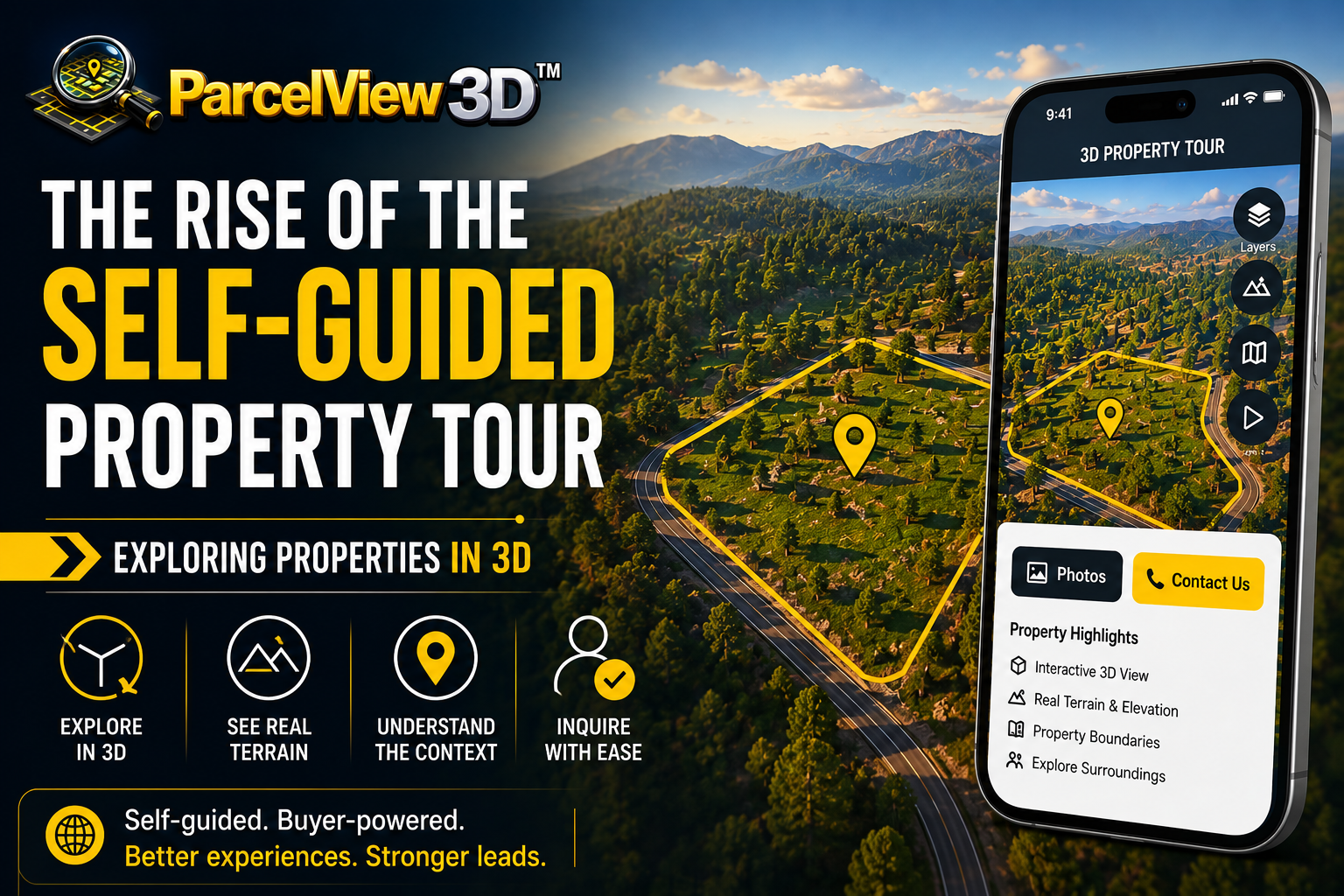
But land is not a house, and the assumptions don’t transfer. A raw parcel has no rooms to walk through, no walls to scan. What matters is topography, road access, boundary lines, flood exposure, and how a future build would actually sit on the site. This is precisely where ParcelView3D was designed to shine. Where indoor walkthrough tools assume you’re stepping through a doorway, ParcelView3D assumes you’re flying over acreage — presenting real terrain, boundaries, and elevation in photorealistic 3D, then layering on the overlays that land buyers actually care about: slope, flood zones, wetlands, zoning, and more. For land and outdoor property, that purpose-built approach gives sellers something the general-purpose walkthrough tools simply weren’t built to deliver, and it does so without requiring a drone, a scanner, or a site visit.
The result is that a market historically stuck with flat aerial screenshots now has access to the same caliber of immersive, self-guided experience that residential buyers came to expect — but tuned for the realities of land, lots, and new-build sites.
The Distribution Advantage: Tours That Travel
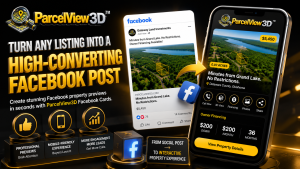
A tour is only as valuable as the number of qualified buyers who actually experience it. This is where the self-guided model has quietly outgrown its origins. A modern 3D property experience isn’t trapped on one listing portal — it embeds anywhere with a single link, which means it can live on your own site, ride along in an email, sit inside a marketplace listing, or hide behind a QR code stapled to a roadside sign.
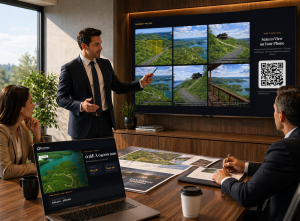
That last channel is more powerful than it sounds. A buyer physically standing at the edge of a property, phone in hand, is the warmest lead there is — and handing them an instant, explorable 3D tour at that exact moment closes the gap between curiosity and inquiry. We broke down that specific play in Scan, Explore, Inquire. Sellers can also route finished tours into a browsable storefront — the kind of always-on shop window you see at Land Listings Pro — so a single portfolio of properties works around the clock.
What This Means for Sellers in Practice
For the professional watching this trend, the strategic takeaway is straightforward: the self-guided tour is shifting from a differentiator to an expectation. Buyers who have explored one property in 3D are measurably less patient with the next listing that offers only a photo grid. The bar has moved.
The operators pulling ahead tend to share a few habits:
- They lead with exploration, not description — the interactive tour is the hero of the listing, not an afterthought buried below the fold.
- They put the tour everywhere a buyer might encounter the property — website, email, marketplace, social, and print via QR.
- They let the tour do the qualifying, so their follow-up time goes to buyers who have already committed the mental energy to explore.
- They track engagement and follow up the warm prospects first, rather than treating every lead as equal.
None of this requires a technical background or a marketing department. If you’re weighing whether to build this in-house or hand it off, we compared the trade-offs directly in ParcelView3D vs. Hiring a Marketing Agency or VA — and for most solo operators, owning the tool wins on both cost and control.
The Direction of Travel
Every few years, a technology stops being a competitive edge and starts being table stakes. Online listings did it. Then professional photography. Then drone footage. The self-guided 3D tour is next in that lineage — and it is arriving faster for land and outdoor property than most of the market has noticed, precisely because the tools finally exist to serve it well.
The sellers who move now aren’t just keeping up. They’re setting the standard their competitors will eventually be measured against. A buyer who explores a property in full 3D — turning it, reading the land, imagining the build — arrives at the conversation already sold on the possibility. Everything after that is just paperwork.
See it on your own listing. You can start a free 7-day trial with no card required, compare plans, or book a 15-minute demo to watch a property go from parcel to interactive 3D tour in minutes.