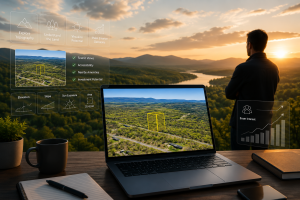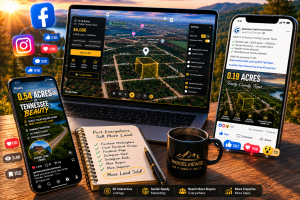
Most rural land is still sold the way it was in 2005: a blurry aerial photo, a price, and three words that quietly kill half your deals — “Call for details.”
Here’s the problem. The buyer found your parcel at 11:40pm on their phone. They’re ready. They have questions about flood zones, access, and whether they can swing the monthly payment. But there’s nobody to ask, no way to see the land properly, and no way to move forward. So they bookmark it, tell themselves they’ll call tomorrow, and never do.
A self-service land buying experience removes the gatekeeper. It lets a serious buyer find a property, understand it completely, see exactly what financing looks like, and reserve or buy it — without waiting on a phone call, an email reply, or your business hours. Done right, it turns your inventory into something closer to a storefront than a classified ad.
This article walks through the five components that make that experience work, and how to assemble them with tools you can stand up without a dev team.
See it live first: View the interactive demo
Why “self-service” is the unfair advantage in land
Land is a uniquely good fit for self-service, for one simple reason: the buyer’s biggest questions are answerable with data, not with a salesperson.
Where is it? What does the parcel actually look like? Is it in a flood zone? Are there wetlands? What’s the road access? What will it cost per month? Every one of those has a factual answer. When you surface those answers up front, you do two things at once — you build trust, and you let qualified buyers qualify themselves. The people who book a call after that are far closer to buying.
The land sellers still relying on “call for details” are betting that friction filters for serious buyers. It doesn’t. It filters for buyers with the patience of a saint, and there aren’t many of those at midnight on a phone.
The 5 components of a self-service buying experience
1. Show the land — don’t describe it
A flat satellite screenshot tells a buyer almost nothing. They can’t read elevation, they can’t gauge the shape of the parcel against the road, and they definitely can’t picture standing on it.
This is where interactive 3D parcel visualization changes the game. Instead of a static image, the buyer gets a parcel they can rotate, tilt, and explore — with the actual boundaries drawn on the terrain.
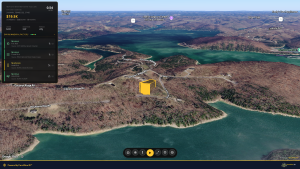
The shift is subtle but enormous: a 2D listing asks the buyer to imagine the land. A 3D view lets them inspect it. That’s the difference between a browser and a buyer.
2. Answer every question before it’s asked
The objections that stall land deals are predictable — flooding, wetlands, access, utilities, zoning. So answer them inside the listing, before the buyer has to go hunting (and before they find a reason to walk).
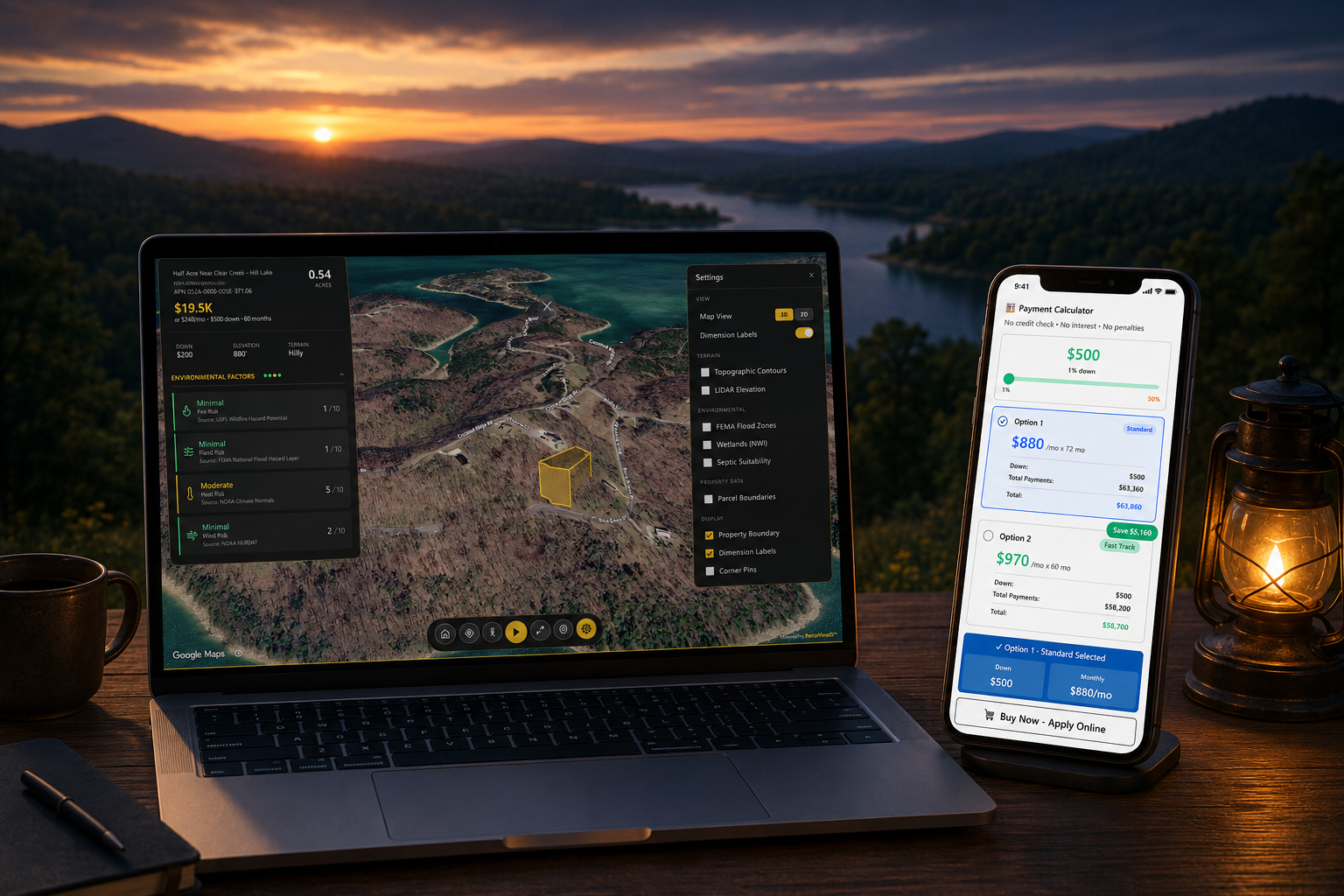
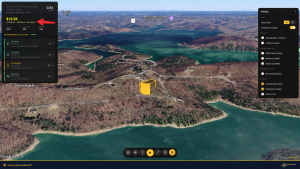
Overlays do this elegantly. Toggle flood zones, wetlands, and parcel data right on the map, and the buyer gets their answer in one tap instead of an email and a 24-hour wait.
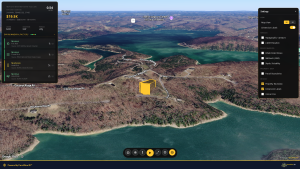
Transparency here is counterintuitive but powerful. Showing a wetland on a parcel doesn’t scare off the right buyer — it earns their trust and pre-empts the deal-killing surprise three weeks into closing.
3. Make financing transparent and instant
In rural land, owner financing is the product. Most buyers can’t or won’t get a traditional loan for a vacant parcel, so the monthly payment is the decision. Yet most listings bury it behind a phone call.
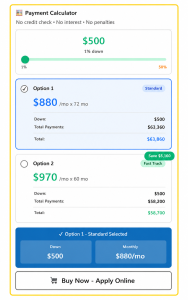
Put the numbers front and center. A buyer should be able to see the down payment, the monthly amount, and the term without asking anyone. Even better, let them adjust the down payment and watch the monthly update live.
When the payment is visible and obviously affordable, the buyer has already made the hardest decision in their head before they ever contact you. You’re no longer selling — you’re confirming.
4. Let them reserve or buy it themselves
This is the step most land sellers skip, and it’s the one that actually defines “self-service.” If the only next action is “contact us,” you’ve built a very nice brochure, not a buying experience.
Give the buyer a real action: reserve the parcel with a deposit, or start the purchase, right there. A small refundable reservation deposit is the perfect bridge — low enough that a motivated buyer won’t hesitate, high enough that it filters out tire-kickers and takes the property off the table while paperwork happens.
The psychology matters. A buyer who has put down even a small deposit has crossed from considering to committed. Your follow-up is no longer a cold sales call — it’s onboarding someone who already said yes.
5. Onboard and collect payments automatically
The experience doesn’t end at the sale — and neither should the automation. Once someone buys, they should land in a customer portal where they can view their documents, see their balance, and make payments without emailing you a question every month.
This is the part that protects your time as you scale. Owner financing means you’re effectively running a small lending operation across dozens of buyers. A self-service portal turns what would be a flood of “what’s my balance?” emails into a system that runs itself.
Putting it together: the buyer’s journey, start to finish
Here’s what the whole experience looks like from the buyer’s side, with no human in the loop until they choose to add one:
- Discovery — They find your parcel on a listing site or your own marketplace.
- Inspection — They open the 3D view, rotate the land, and read the terrain.
- Diligence — They toggle flood and wetlands overlays; their objections get answered on the spot.
- Affordability — They see the down payment and monthly figure, adjust it, and decide it works.
- Commitment — They reserve the parcel with a deposit, themselves, at midnight if they want.
- Onboarding — They’re guided into a portal to sign, pay, and manage everything going forward.
At no point did they have to wait for your business hours. And at every point, the experience built trust instead of friction.
Why this beats “call for details” every time
A self-service buying experience wins for three reasons that compound:
- It works around the clock. Your best inventory is being inspected and reserved while you sleep, on weekends, and on holidays.
- It pre-qualifies for you. Buyers who’ve seen the land in 3D, checked the overlays, and accepted the monthly payment are dramatically more likely to close than someone who filled out a “request info” form.
- It scales without scaling you. The same system serves your tenth buyer and your two-hundredth without adding a single hour to your week.
The land sellers who win the next few years won’t be the ones with the most listings. They’ll be the ones whose listings answer, reassure, and close on their own.
See it in action
The fastest way to understand a self-service land buying experience is to use one. Explore an interactive parcel — rotate it in 3D, flip on the overlays, and walk through the buying flow exactly as a real buyer would.
If you’re a land seller or investor and you want this experience running on your own inventory, the same toolset — interactive 3D parcels, data overlays, transparent owner financing, and a self-service buyer portal — is what powers it end to end.