If you sell vacant land, you’ve probably experienced it before.
A buyer asks a few questions. They seem excited. Maybe they even talk financing, timelines, or what they plan to build. Then suddenly… silence.
No response.
No callback.
No explanation.
You follow up once, twice, maybe three times. Nothing.
Most land sellers assume the buyer lost interest or found another property. Sometimes that’s true. But more often, something else is happening beneath the surface:
The buyer became uncertain.
And uncertainty is one of the biggest hidden reasons land deals fall apart.
Unlike homes, vacant land is difficult to understand online. Buyers can’t walk through a kitchen, picture furniture placement, or instantly imagine themselves living there. Land requires imagination, confidence, and context.
If buyers can’t understand what they’re looking at, they often stop responding—not because they’re uninterested, but because they no longer feel confident moving forward.
The good news? There’s a way to rebuild that trust.
Interactive property views are changing how land buyers evaluate properties, helping sellers answer questions before they’re asked and making buyers feel more confident from the very beginning.
Why Land Buyers Stop Responding
Ghosting happens for a reason.
Most buyers don’t disappear randomly. Usually, they hit a point where uncertainty becomes bigger than excitement.
Here are some of the most common reasons land buyers stop responding.
1. They Can’t Fully Visualize the Property
Vacant land is harder to market than a house.
A few aerial photos and parcel outlines often leave buyers with more questions than answers.
They start wondering:
- What does the surrounding area actually look like?
- Is the land steep or flat?
- How isolated is the property?
- What’s nearby?
- Can I picture myself using this land?
When buyers struggle to visualize the opportunity, momentum fades quickly.
And in online buying behavior, hesitation often looks like silence.
2. They’re Buying Remotely
Today’s land market is increasingly remote.
Many buyers are purchasing from another city—or another state entirely.
That creates a confidence problem.
They may not have time to visit the property before making a decision. In many cases, they’re relying almost entirely on the listing experience to determine whether they should move forward.
If a listing feels incomplete or difficult to understand, buyers become cautious.
And cautious buyers delay decisions.
3. Too Many Unanswered Questions Create Friction
Every unanswered question creates mental resistance.
Most buyers won’t tell you they’re confused.
They simply move on.
Think about it this way:
When a buyer has to work hard to understand a property, it begins to feel risky.
Risk creates hesitation.
Hesitation kills momentum.
Momentum is what drives deals forward.
That means reducing uncertainty is often more valuable than increasing lead volume.
Why Traditional Land Listings Often Fall Short
Traditional listings aren’t necessarily bad.
But they were built for a different era of buyer expectations.
Most land listings include:
- A few photos
- Basic property information
- A location map
- Parcel dimensions
- Financing details
The problem?
This information tells buyers about the property.
It doesn’t help them experience it.
And buyers today expect more than information.
They want clarity.
They want confidence.
They want to understand what life, ownership, or investment potential might actually feel like.
Static images only tell part of the story.
Especially for raw land.
A buyer looking at acreage wants to understand:
- The surrounding environment
- Nearby roads and attractions
- Terrain and usability
- Context around the property
- The bigger picture
Without this context, buyers often pause—and once momentum slows, response rates tend to drop.
The Hidden Psychology Behind Buyer Ghosting
Here’s something many land sellers overlook:
People rarely ghost because they aren’t interested.
They ghost because uncertainty quietly outweighs excitement.
In psychology, this is known as risk avoidance.
When buyers feel uncertain, their brain naturally searches for reasons to delay.
They begin asking themselves:
“What if I’m missing something?”
“What if the property isn’t what I expect?”
“What if I regret this purchase?”
And because land can feel abstract online, these doubts become amplified.
The reality is simple:
Confidence closes deals.
Not pressure.
Not aggressive follow-up.
Confidence.
The easier it is for buyers to understand a property, the more likely they are to continue the conversation.
How Interactive Property Views Help Rebuild Buyer Trust
This is where interactive property experiences can make a meaningful difference.
Instead of simply showing buyers a property, sellers can help them better understand it.
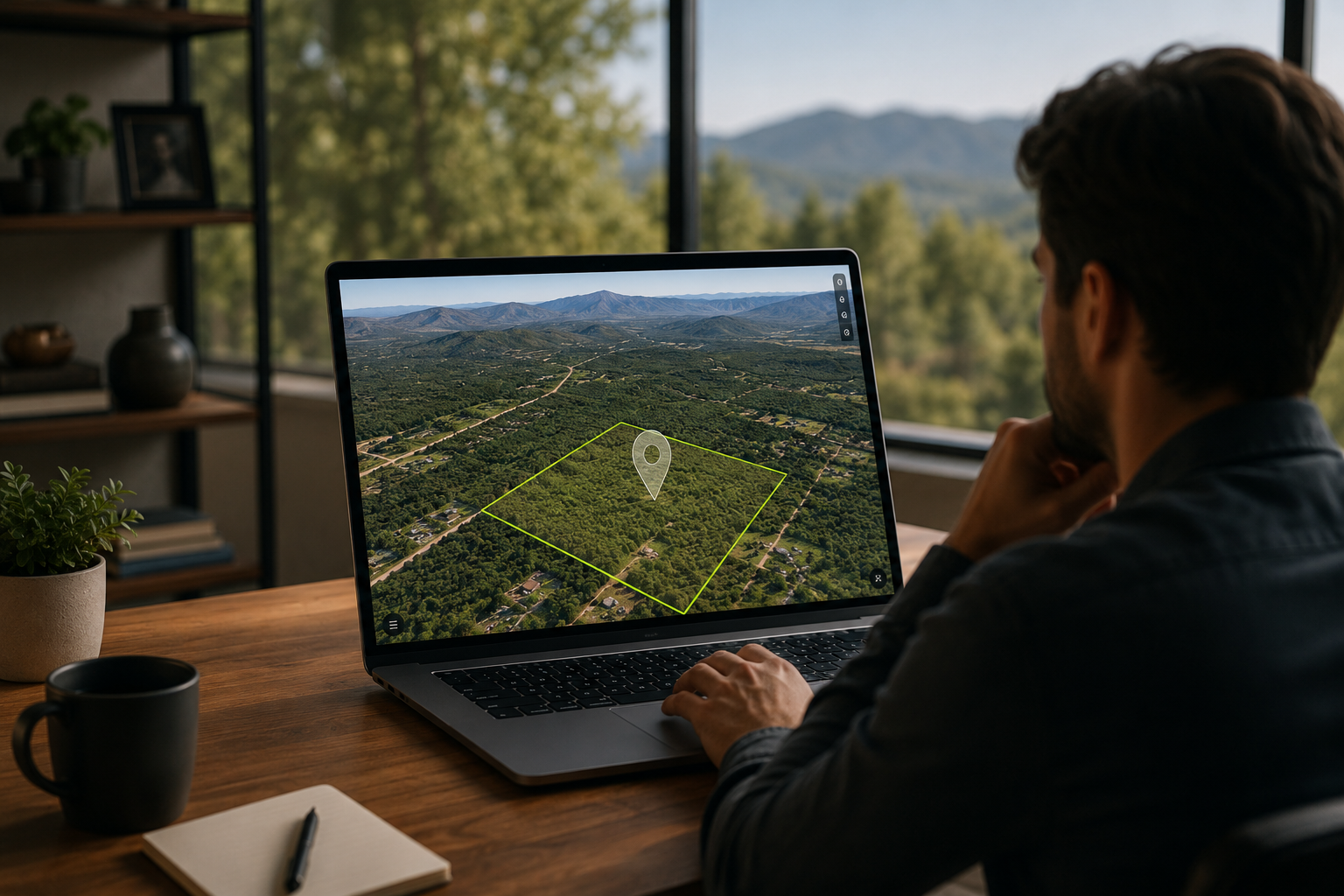
With interactive property views through ParcelView3D, buyers can explore a property in a more engaging and visual way.
Rather than relying only on flat photos and static maps, buyers gain more context around the property and its surroundings.
This creates something extremely valuable:
Confidence.
When buyers feel like they understand a property better, hesitation tends to decrease.
That often leads to:
- More engaged buyers
- Better quality inquiries
- Fewer repetitive questions
- Greater confidence in remote purchases
- More meaningful conversations
Instead of wondering what the area feels like, buyers can better understand the environment before ever reaching out.
Example Scenario
Imagine an out-of-state buyer looking at five-acre recreational land.
The photos look decent.
But they still have questions.
What’s around it?
How remote is it?
What does the surrounding area feel like?
Normally, uncertainty might cause them to stop responding.
But with a more interactive property experience, they can better explore the surroundings and gain context that photos alone may not communicate.
Instead of feeling uncertain, they feel informed.
That shift matters.
Because informed buyers tend to become more serious buyers.
How Sellers Can Reduce Buyer Ghosting Starting Today
Whether you’re selling one property or managing hundreds of listings, reducing buyer hesitation should be a priority.
Here are a few practical ways to improve engagement:
1. Improve Property Visualization
Buyers need more than parcel lines.
Help them understand the property visually.
The easier something is to understand, the easier it becomes to trust.
2. Focus on Context, Not Just Features
Don’t just tell buyers acreage.
Help them understand surroundings, nearby attractions, accessibility, and what makes the area appealing.
Context sells confidence.
3. Reduce Buyer Effort
Every extra question a buyer has to ask adds friction.
The more information buyers can understand upfront, the more qualified and motivated your inquiries become.
4. Make Remote Buying Easier
Many land buyers never visit before purchasing.
Your listing experience should help bridge that gap.
The easier remote evaluation becomes, the stronger buyer trust grows.
Final Thoughts: Buyers Don’t Disappear Because They Aren’t Interested
Most land buyers don’t vanish because they suddenly stopped liking the property.
They disappear because something interrupted their confidence.
Unanswered questions.
Limited visualization.
Lack of context.
Uncertainty.
And uncertainty quietly kills momentum.
The sellers who consistently generate stronger engagement are often the ones making it easier for buyers to understand what they’re considering.
That’s where better property visualization can make a difference.
ParcelView3D helps land sellers create a more interactive property experience—giving buyers more confidence before they ever schedule a visit or make a call.
If you want to reduce buyer hesitation and help serious buyers stay engaged longer, explore the ParcelView3D demo and see how a more interactive property experience can help rebuild buyer trust.
Demo Page: https://parcelview3d.com/