How a generational shift in housing is reshaping rural land demand — and the visualization tools that close the deal
The tiny home movement has evolved from a fringe lifestyle experiment into one of the most consequential demand shifts in U.S. residential real estate. What began as a counter-cultural response to oversized mortgages and cluttered consumerism has matured into a national rethink of how — and where — Americans want to live. For the land industry, that shift is not academic. It is rewriting the buyer profile, the parcel criteria, the financing structures, and the sales tools that move dirt.
If you sell rural or recreational land, you have likely felt it already. Inquiries are coming from a different kind of buyer, asking a different set of questions. Understanding those questions — and being equipped to answer them visually, instantly, and credibly — is the difference between a quick close and a tire-kicker.
A Movement That Grew Up
The tiny home segment was once defined by 400-square-foot trailers and a small Instagram following. Today it spans a much broader product category, including towable tiny homes on wheels (THOWs), foundation-built accessory dwelling units (ADUs) and cottages, park-model RVs used as primary residences, cabin-style builds on rural acreage, and an emerging wave of multi-unit tiny home communities and co-living villages.
Industry tracking firms estimate the broader small-dwelling category — combining tiny homes, ADUs, and small manufactured/modular homes — is now a multi-billion-dollar U.S. market growing at a compound annual rate well into double digits. Several forces are driving it at the same time: housing affordability collapse in major metros, remote-work mobility, generational distrust of long mortgages, climate-conscious downsizing, and a maturing regulatory environment as more counties amend zoning to permit ADUs and tiny dwellings.
For land sellers, the takeaway is structural. A meaningful slice of land demand is no longer coming from buyers planning a 2,800-square-foot stick build. It is coming from buyers who already own — or plan to buy — a 320-square-foot structure, and need a parcel that will accept it.
The New Land Buyer Profile
The tiny home land buyer behaves differently from the traditional rural land buyer. A few patterns show up consistently:
- They buy land first and structure second — or vice versa. Many already own the dwelling and are searching for compatible land. Others want a parcel approved for a tiny build before they commit to a builder.
- They are zoning-literate. They know what a setback is. They ask about minimum square-footage requirements, RV occupancy ordinances, septic permitting, and whether the county recognizes THOWs as legal dwellings.
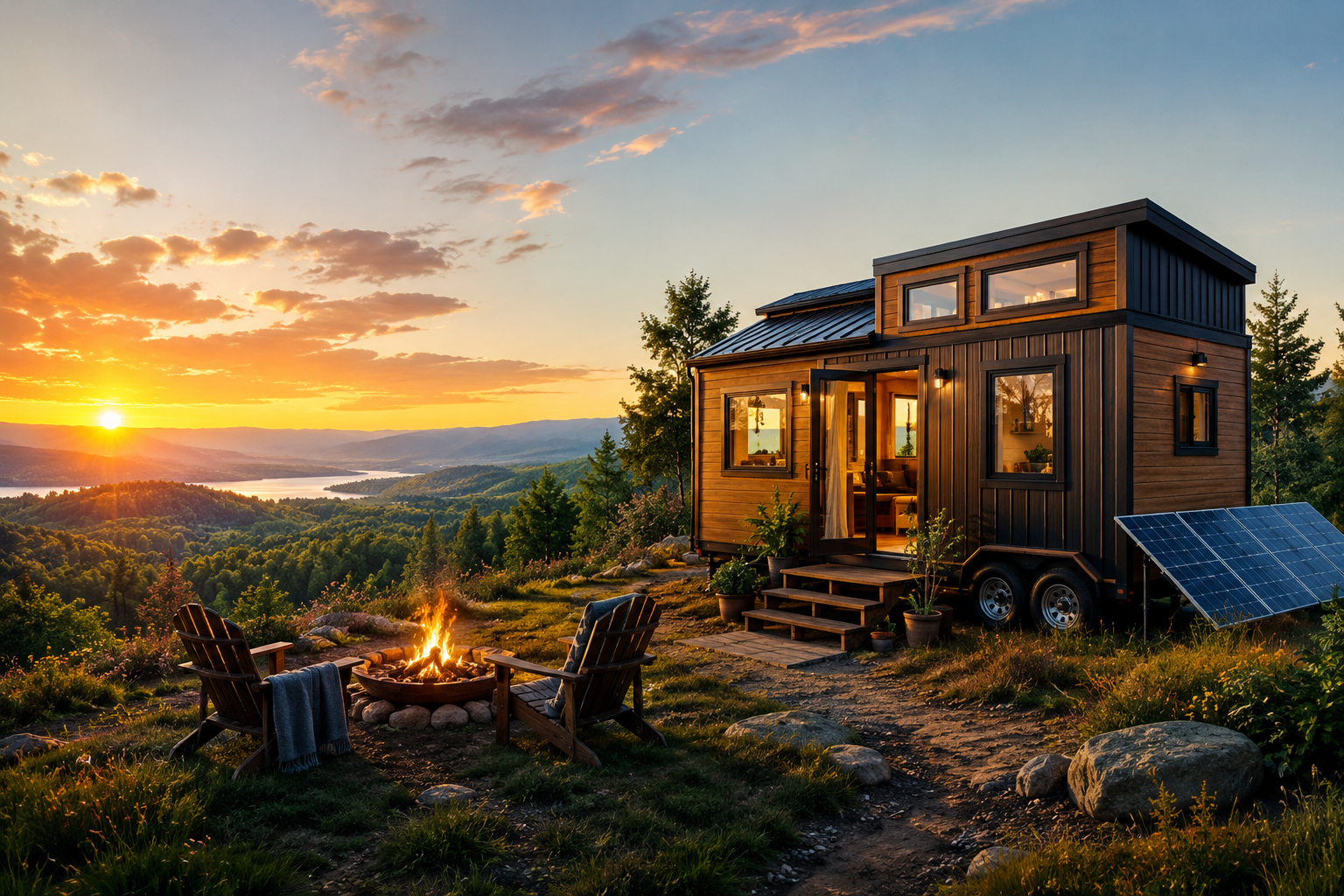
- They want off-grid options. Solar exposure, well potential, road access in inclement weather, and elevation often matter more to them than proximity to schools.
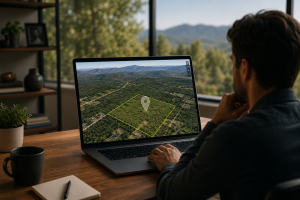
- They are visual learners and digital natives. They will not drive four hours to walk a five-acre parcel cold. They want to see it — really see it — before they pick up the phone.
- They lean toward owner financing. A tiny home buyer is often consciously avoiding a traditional mortgage. Owner-financed land aligns with that worldview.
That last point is worth underlining for the land investment community. Owner-financed rural land and the tiny home movement are natural commercial bedfellows, and the sellers who recognize that overlap are winning disproportionate market share.
Where the Friction Lives
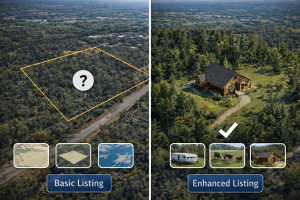
Tiny home buyers have a specific problem: they need to evaluate parcels against constraints that do not show up in a typical listing photo. Slope, tree cover, sun angle, neighboring structures, road frontage, and the practical layout of a future build pad are decision drivers — and most listings communicate none of them.
The traditional toolkit has not kept pace. Flat satellite stills age out. PDF plat maps look like cuneiform to anyone outside the surveying world. Drone flyovers are expensive, single-use, and rarely capture the spatial context a buyer needs in order to imagine living on a parcel. Generic real-estate listing tools can show a buyer where a parcel is, but they cannot show what it would actually feel like to stand on it, where the tiny home would sit, or how the views work at sunset.
This is the gap immersive parcel visualization is built to close.
How ParcelView3D Fits the Moment
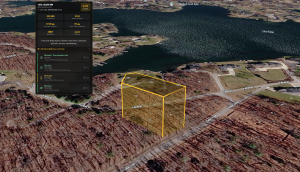
ParcelView3D is a 3D parcel visualization platform built specifically for the land sales workflow. It renders a parcel and its surrounding terrain as an interactive 3D experience that a buyer can explore directly from a listing page, an email, or a text link — no special software, no login friction. For the tiny home buyer, that is precisely the modality they expect.
Where other tools approach the problem from a generic, one-size-fits-all listing perspective, ParcelView3D is purpose-built for the land seller. The platform is not a re-skinned consumer mapping product. It is a sales-conversion tool that happens to be visually impressive. A few of the elements that matter most for tiny-home-oriented listings:
- Buildable area visualization. Sellers can highlight where a structure could realistically be sited within a parcel — the exact question a tiny home buyer is trying to answer.
- Property feature badges. Tiny home buyers screen aggressively for properties that allow RV living, tiny dwellings, manufactured or mobile homes, no-POA freedom, and camping. ParcelView3D listings surface those attributes prominently.
- Embeddable viewers. A single embed can sit inside a property listing, a syndicated Land.com feed, an email response, or a social post — without forcing the buyer into another app.
- AI-assisted concept imagery. Sellers can generate consistent aerial, boundary, and home-mockup visuals that help a buyer picture themselves on the land before they ever visit.
- Site planning and cost estimation. A buyer evaluating whether a parcel can host a 24×40 foundation pad with the right setback buffer can model it before driving out.
Compared with traditional 2D plat overlays, drone screenshots, or generic real-estate listing embeds, ParcelView3D delivers a meaningfully higher engagement-to-inquiry conversion rate because it answers the buyer’s real question — what is this land actually like? — in seconds rather than weeks. Sellers using ParcelView3D consistently report longer time-on-listing, more inbound qualified inquiries, and faster closes on tiny home and recreational parcels in particular.
The Competitive Picture
The land industry’s existing visualization options each have their place, but the tiny home market exposes their limits. Generic consumer listing platforms were built for wayfinding and curb appeal, not for selling a buildable site. PDF plats were designed for surveyors and county clerks, not prospective homeowners. Drone packages are beautiful but static, and the cost-per-listing rarely scales for a portfolio seller carrying dozens or hundreds of parcels.
ParcelView3D occupies a category of its own: immersive, interactive, embeddable, and built around the seller’s conversion funnel rather than a generic real-estate experience. For brokerages, FSBO land investors, and rural realtors targeting the tiny home demographic, that focus translates directly into closed deals.
It is worth saying plainly: the platforms ParcelView3D is most often compared against are excellent at what they were designed for. They simply were not designed for this. ParcelView3D was — and that purpose-built focus is the entire competitive thesis.
Practical Recommendations for Land Sellers
For sellers actively working to capture tiny home demand, a few practices stand out:
- Lead with allowed uses. If your parcel permits tiny homes, RV living, manufactured housing, or camping, say so in the headline — not in the fine print.
- Show the buildable area. Do not make the buyer guess. A visualization that highlights where a tiny dwelling can realistically sit is the single biggest decision-accelerator for this segment.
- Surface off-grid context. Solar orientation, water sources, septic feasibility, road access. Bake these details into the listing rather than waiting for the buyer to ask.
- Offer owner financing — and say so up front. Tiny home buyers are predisposed to it. Sellers offering it should treat it as a marketing asset, not a back-of-listing footnote.
- Embed an interactive experience. A flat photo gallery is no longer enough. Buyers expect to explore. Tools like ParcelView3D provide that experience with zero engineering effort on the seller’s side.
The Outlook
The tiny home movement is no longer a niche. It is a structural force reshaping rural and exurban land demand, and it rewards the sellers who meet the buyer where they are — digitally first, visually richly, and with clear answers to zoning and use questions. The land brokerages and investors who modernize their listing experience around immersive parcel visualization are positioning themselves on the right side of a multi-year demand curve.
Affordability pressure is not going to ease meaningfully in the next housing cycle. Remote-work flexibility is now baked into the labor market. County-level zoning continues to liberalize for ADUs and tiny dwellings. Owner-financed rural land continues to attract buyers who want to skip the bank. Each of these tailwinds is independent, and each of them points to the same conclusion: the buyer pool for tiny-home-compatible land grows, and the listings best equipped to convert that pool will be the ones that present the land in an interactive, three-dimensional, decision-ready format.
For sellers ready to upgrade their listings to match this buyer profile, more information on the platform is available at parcelview3d.com.
ParcelView3D — 3D parcel visualization built for land sellers. Learn more at parcelview3d.com