Most vacant-land listings lose buyers in the first thirty seconds. Not because the property is bad — but because the listing can’t answer the questions buyers actually have. Here’s how to fix that, and why the sellers who fix it close deals weeks ahead of the rest of the market.
Anyone who has tried to sell a piece of vacant land knows the pattern. A serious-sounding inquiry comes in, a few questions get traded by email, and then… silence. The buyer never schedules a showing. They never make an offer. They simply move on to the next listing. Multiply that by every interested party who clicks a listing and never converts, and the picture becomes painful: most land sellers are losing the deal long before they ever get on a phone call.
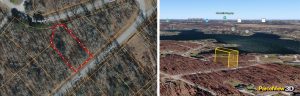
The instinct is to blame price. Sometimes that’s right. But far more often, the listing itself is the bottleneck. Land buyers are being asked to commit thousands — or hundreds of thousands — of dollars to a property they cannot meaningfully see. Photos taken at ground level show grass, trees, and sky. Plat maps look like geometry homework. Drone shots help, but only a little. The buyer is left guessing about the things that actually matter: shape, slope, road access, neighboring land use, and how the parcel fits into its surroundings.
That gap between what a buyer needs to know and what a typical listing shows them is the single biggest reason land deals stall. Closing that gap is what ParcelView3D was built to do.
The Real Problem: Buyer Confidence, Not Buyer Interest
Land sellers tend to talk about lead generation as if it’s the central problem. It usually isn’t. Most listings already attract enough eyeballs — Zillow, LandWatch, Land.com, Facebook Marketplace, and the rest send plenty of curious browsers. The drop-off happens further down the funnel. Interested becomes uncertain. Uncertain becomes silent. Silent becomes lost.
When a buyer cannot picture a property clearly, every unanswered question becomes a reason to stall. Is the lot wooded all the way through, or is there a clearing? How steep is that back corner? Does the road actually reach the parcel, or does it stop short? What’s on the neighboring lot — a quiet cabin, a junkyard, a development under construction? Buyers are too polite to ask all of these questions. They just disappear.
The sellers who consistently close faster aren’t necessarily the ones with the best land or the lowest price. They’re the ones whose listings answer the silent questions before they’re asked.
What an Immersive Listing Actually Does
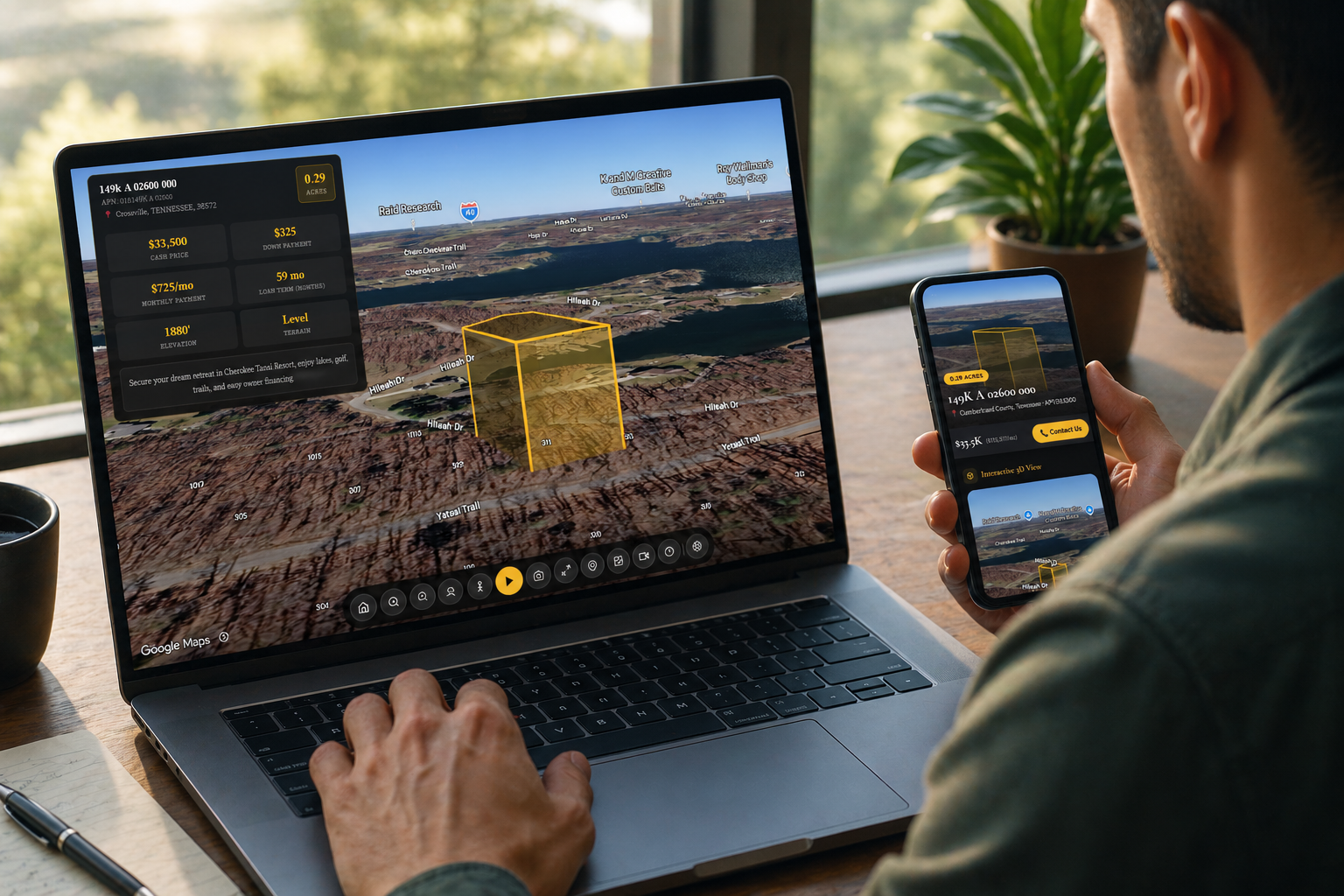
An immersive listing isn’t a gimmick. It’s a confidence-building tool. When a prospective buyer can rotate, tilt, and fly around a parcel — and see the parcel boundary cleanly drawn on top of real-world terrain and surroundings — three things happen at once.
- They form a mental model of the property in seconds, not in a back-and-forth email thread.
- They self-qualify. Buyers who weren’t a fit drop out quickly, and the ones who stay engaged are dramatically more serious.
- They start making decisions. “I want to walk this one” replaces “I’m still thinking about it.”
That last point is the one that quietly drives faster sales. Most land deals don’t fail because the buyer says no. They fail because the buyer never says anything. Immersive listings break the silence by giving buyers enough information to commit to a next step.
Why ParcelView3D Wins Where Other Tools Fall Short
There’s no shortage of marketing tools aimed at land sellers. Drone services, virtual tour vendors, and generic real-estate platforms all promise something. So why does ParcelView3D consistently outperform them for vacant land?
It’s purpose-built for land — not retrofitted from home tools
Most virtual-tour products were designed for the inside of a house. Pointing them at twenty acres of brush produces something that’s technically interactive but practically useless. ParcelView3D was designed from day one around how land buyers actually evaluate a parcel: outline the boundary, place it in real-world context, and let the viewer explore the terrain and the neighborhood at their own pace.
Buyers don’t need to install anything
Compared to platforms that require a download, an account, or a special viewer, ParcelView3D loads inside any browser on a phone, tablet, or laptop. The buyer clicks a link from your listing or your email and is exploring the property within seconds. No friction means no drop-off — and listings that are easy to share get shared.
The parcel itself is the centerpiece
Where some tools dump a buyer onto a generic map and expect them to find the property, ParcelView3D puts the parcel boundary front and center, lit clearly against the surrounding terrain. The buyer sees, immediately and unmistakably, what they would actually own. That clarity sounds small. In practice it’s the difference between a buyer who keeps scrolling and one who picks up the phone.
The Workflow That Closes Deals Faster
The investors and brokers getting the most out of ParcelView3D tend to follow a similar pattern. It’s not complicated — but the consistency is what produces the results.
1. Build the listing once, share it everywhere
A single immersive listing can be embedded into your own website, dropped into Land.com or LandWatch listings as a virtual tour link, sent in cold-outreach emails, posted to Facebook, and forwarded into text-message conversations with interested buyers. One asset, every channel.
2. Let the listing do the qualifying
Instead of fielding the same five questions twenty times, you let the buyer answer them for themselves by exploring the property. By the time someone reaches out, they’ve already pre-qualified themselves. The conversations you have are dramatically shorter and dramatically closer to a deal.
3. Use the listing as the showing
Out-of-state buyers, busy professionals, and investors who run multiple deals at once often can’t justify a site visit until they’re already 80% sold. An immersive listing closes that gap — the buyer effectively walks the land before they ever get in the car. When they do show up in person, it’s to confirm what they already believe, not to start from zero.
What Sellers Actually Report
The pattern shows up over and over again with sellers who switch from flat listings to immersive ones. Inquiries become more serious. Email threads get shorter. Properties that sat on the market for months start moving in weeks. Sellers stop apologizing for their properties on the phone, because the property has already done the talking.
None of this is magic. It’s the predictable result of giving buyers the information they need, in the format they need it, at the moment they need it. Land buyers want to feel confident before they commit. An immersive listing earns that confidence in a way no static photo set ever can.
Try It on One of Your Own Properties
The fastest way to understand what ParcelView3D does is to see one of your own listings inside it. The free trial is built around exactly that — pick a property, build an immersive listing, share it with a few of your active leads, and watch how the conversation changes.
Explore a live demo and example listings here: https://parcelview3d.com
Start your free trial: https://parcelview3d.com/register/
If your listings are doing the job of attracting buyers but not the job of converting them, the gap isn’t your price — it’s your presentation. Close that gap, and the rest of your funnel starts working the way it was supposed to all along.
ParcelView3D — Immersive land listings that turn skeptical browsers into serious buyers.