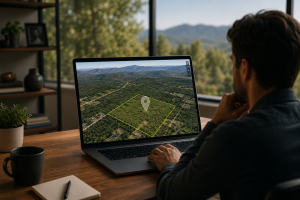
Every land seller knows the flyer. A single aerial photo, a headline price, a few bullet points, and a phone number — printed, stacked, and handed out at the property, stapled to a corkboard, or dropped in a mailbox. Flyers and brochures have sold land for decades, and there is something reassuring about a piece of paper you can hold. But raw land is one of the hardest things in real estate to sell from a flat image, and a printed sheet asks the buyer to imagine everything that matters: the slope of the ground, where the road frontage sits, how the trees fall, and what it would feel like to stand on the lot.
ParcelView3D takes the same job a flyer does — putting a property in front of a buyer — and gives it a serious upgrade. Its PropCards turn any parcel into a polished, mobile-first landing page that a buyer can explore, share, and act on from anywhere. This article walks through how the two compare, where the printed flyer runs out of road, and why a PropCard tends to do more work for every property you list.
What a PropCard actually is
A PropCard is a shareable web page built automatically for a single property. At the top sits an interactive, photorealistic 3D view of the parcel rendered on real terrain and aerial imagery — the buyer drags to rotate, scrolls to zoom, and can watch a cinematic flyover of the land. Below that, the card carries everything a buyer needs to make a decision: pricing and financing terms, a photo gallery, AI concept renderings of what could be built, optional video, and a built-in lead-capture form. The whole thing lives at one link, works on any phone with no app to install, and can be dropped onto a website, texted, emailed, embedded in a marketplace listing, or reached by scanning a QR code.
That last detail matters more than it looks. A flyer ends at its phone number. A PropCard is a doorway: it invites the buyer to explore, and it quietly captures who they are while they do.
Where the printed flyer runs out of road
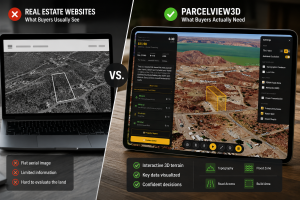
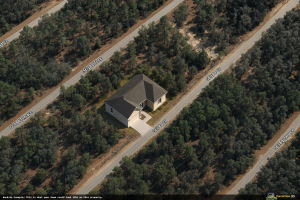
A flyer’s biggest limitation is that it is frozen. The photo you printed is the only view a buyer will ever get, and land almost never photographs well — a wall of trees, a flat green field, or a gravel road tells a buyer very little about the terrain, the usable acreage, or the access. If the price changes, or the lot goes under contract, the flyer is instantly out of date and every printed copy is now wrong. And once it leaves your hand, you have no idea whether anyone looked at it, liked it, or threw it away.
A PropCard solves each of those problems by being live. Because it is generated from the parcel itself, the 3D view shows the real shape and slope of the ground from any angle. Because it lives online, editing the price once updates every place the card has ever been shared. And because it is a web page, it can report back — which is something a piece of paper can never do.
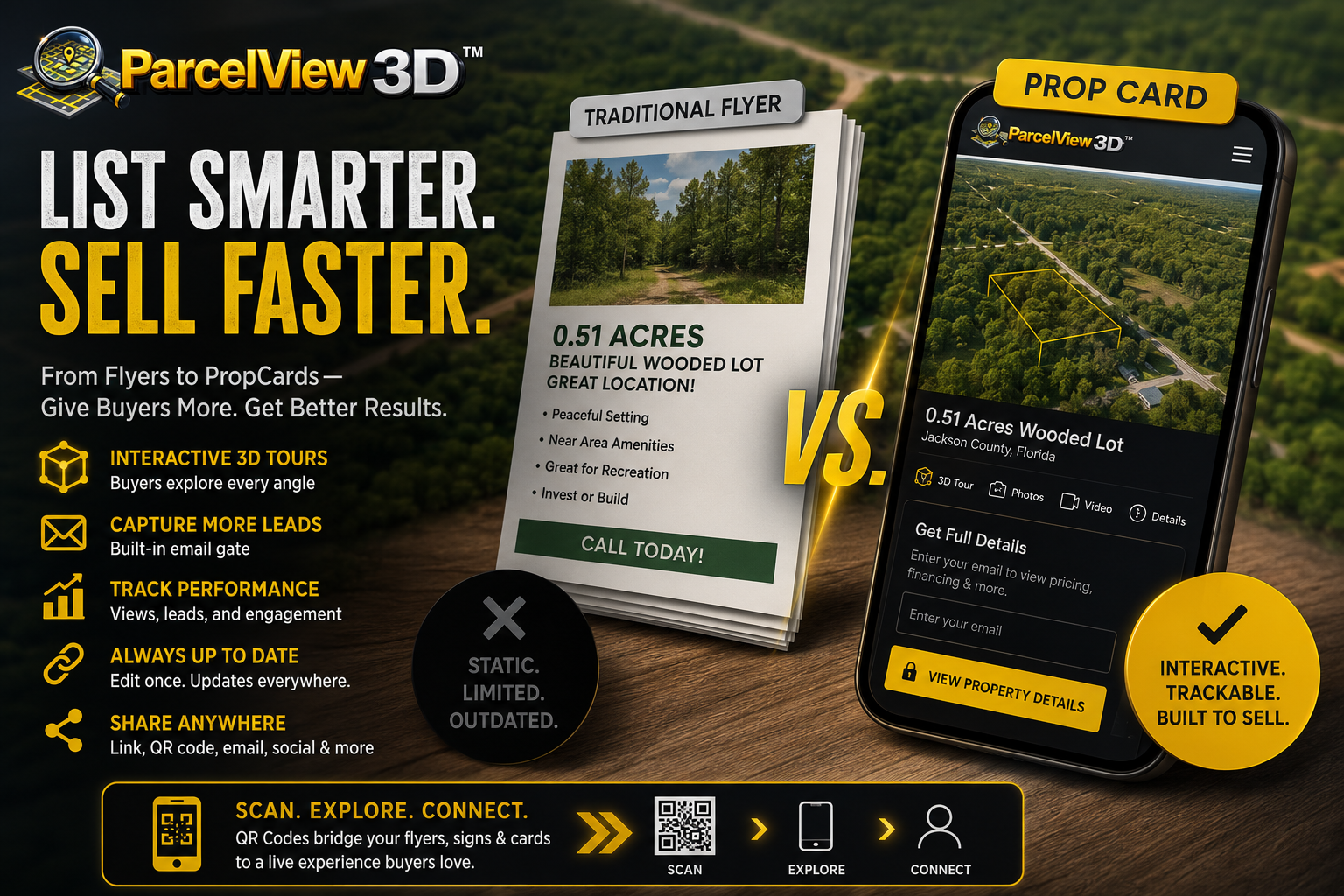
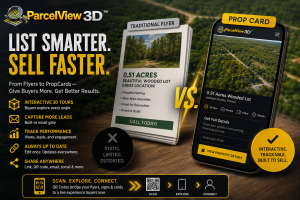
The same listing, two ways
Put them side by side and the difference is hard to unsee. The flyer is a dead end with a phone number at the bottom. The PropCard is interactive, trackable, and always current — and the buyer can tour the land before they ever pick up the phone.
Feature comparison at a glance
Here is how the two stack up across the things that actually move a land deal forward:
| Feature | Traditional Flyer / Brochure | ParcelView3D PropCard |
| Property visual | ✕ One static photo, frozen in time | ✓ Interactive 3D you can rotate, zoom, and fly over |
| Terrain, slope & frontage | ✕ Hidden — a flat image can’t show it | ✓ Visible from every angle on real terrain |
| Updating price or status | ✕ Reprint and re-distribute every copy | ✓ Edit once — every shared link updates instantly |
| Lead capture | ✕ Buyer has to call; you learn nothing otherwise | ✓ Built-in email gate captures the buyer automatically |
| Tracking & analytics | ✕ No idea who saw it or cared | ✓ Views, unique visitors, time on card, and leads |
| Sharing reach | ✕ Limited to physical hand-off or mailbox | ✓ Link, text, email, social embed, or QR code |
| Print compatibility | ✓ Is the print | ✓ QR code bridges yard signs, flyers & cards to the live card |
| Media per property | ✕ Whatever fits on the page | ✓ 3D viewer, photo gallery, concept images & video |
| Trust signals | ✕ Name and phone number | ✓ Verified Seller / Builder / Contractor badges |
| Cost to produce more | ✕ Design + print + reprint for every change | ✓ Generated from the parcel — unlimited, no reprints |
| Works on any phone | ✕ Buyer must be handed a copy | ✓ Opens in any browser — no app to install |
The part paper can’t do: knowing what happened next
Marketing raw land is often a guessing game — you push a listing out and hope. A PropCard replaces the guessing with data. Because every card is a web page with a built-in lead gate, ParcelView3D can show you how many people viewed a property, how many were unique visitors, how long they spent exploring the 3D view, and exactly who submitted their email to unlock the details. A buyer who toured the parcel three times and requested owner-financing terms is a very different lead from a cold name on a list, and the PropCard tells you which is which.
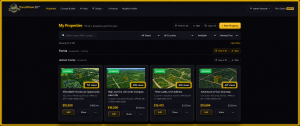
This turns marketing spend into something measurable. Instead of wondering whether a stack of flyers did anything, you can see which properties are getting attention, follow up first with the buyers who came back twice, and put your energy where the interest already is.
Cost, speed, and staying current
A flyer has a real per-piece cost: design, printing, and then reprinting every time something changes. Order a batch, drop the price a week later, and you are paying to print again. PropCards are generated from the parcel data you already have, so producing another one costs nothing extra and takes minutes, not a trip to the print shop. When your inventory turns over — which, for an active land seller, is constantly — that difference compounds quickly across a whole portfolio.
Speed cuts the same way. Standing up a fresh PropCard for a new listing is a matter of minutes, and the moment it exists it is ready to share by link, QR, or embed. There is no lead time, no proofing a print run, and no window where your marketing is out of date because the paper hasn’t caught up with reality.
You don’t have to choose — the QR code bridges both
None of this means physical marketing is dead. Yard signs, mailers, and printed cards still put your property in front of people who are standing on the road or flipping through their mail. The point is that a printed piece should be a bridge, not a dead end. Every PropCard comes with a print-ready QR code, so a yard sign or flyer can carry the buyer straight to the live, interactive card in one scan.
Used that way, your printed materials get the best of both worlds: the physical reach of paper and the interactivity, freshness, and tracking of a PropCard behind it. The sign in the ground stays simple; the experience it leads to does all the selling. Verified badges — Seller, Builder, or Contractor — and business-specific labels make that landing experience feel credible the moment a buyer arrives.
The bottom line
A traditional flyer is familiar, tangible, and genuinely useful for getting a property noticed in the physical world. But on its own it is a single frozen photo that can’t show the land, can’t update, and can’t tell you a thing about who saw it. ParcelView3D’s PropCards keep everything that made the flyer worthwhile — a clean, shareable presentation of your property — and add the parts paper never could: an interactive 3D view that actually shows the land, one link you can update in seconds, built-in lead capture, real analytics, and a QR code that lets your printed materials plug straight into all of it. For anyone selling land, that is a meaningfully stronger way to put a parcel in a buyer’s hands.
Ready to see it on your own listing? Start a free trial at parcelview3d.com — list up to three properties, no card required.